On March 8 (Sunday), Jamaica’s bauxite and alumina industry is approaching its 75th anniversary, marking a milestone for one of the country’s most important economic sectors. Industrial activity in the industry began in 1952, when Alcan shipped its first alumina in January and Reynolds Metals exported its first bauxite on June 5 of the same year.
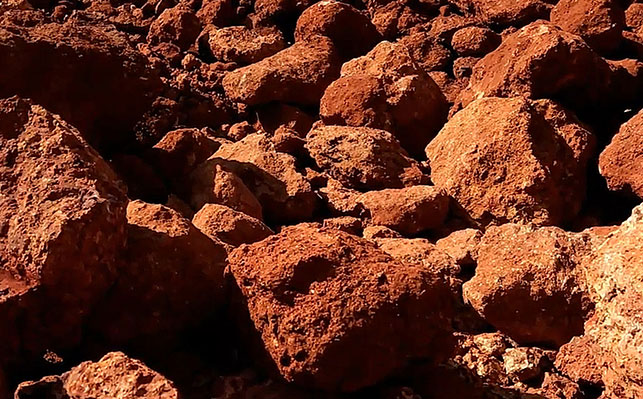
Before the discovery of its economic potential, Jamaica’s red soils were mainly used as building plaster or traditional remedies for stomach and intestinal problems. These soils were largely considered unproductive land until 1938, when analysis showed the deposits contained 45%–51% bauxite, representing a major breakthrough.
Bauxite is the primary raw material used to produce aluminum. The ore is mined, refined into alumina, and then smelted into metallic aluminum.
Alcan obtained exploration rights in Jamaica as early as 1943, followed by Reynolds Metals in 1944. By 1950, Kaiser Bauxite had also acquired large land concessions.
The Jamaican government gradually recognized the national value of bauxite mining, transportation, and local refining into alumina.
“Red Gold”
By the 1970s, Jamaica had become a global leader in mineral exports. Today, however, the country plays a smaller role as bauxite-producing nations compete to increase output and capture larger shares of the market.
Global attention has increasingly shifted toward the upstream aluminum supply chain. Since 2000, global aluminum consumption has increased by more than 100%, and analysts rank aluminum among the fastest-growing metals in global demand.
As a result, discussions about Jamaica’s bauxite sector increasingly emphasize its role as the primary raw material source for aluminum, one of the most abundant metallic elements in the world.
An editorial recently published by The Gleaner highlighted trends in the aluminum market and their implications for Jamaica’s bauxite and alumina industry.
Industry Structure Today
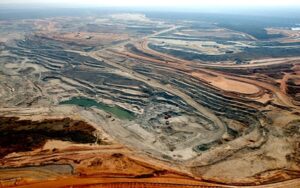
Since 1952, the industry has undergone major changes. Today’s key players include the Jamalco alumina refinery in Clarendon, the Windalco alumina refinery in St. Catherine, and Discovery Bauxite, the only active bauxite producer located in St. Ann.
Data show that Jamaica’s alumina production reached about 1.34 million tonnes in 2024, up from approximately 1.29 million tonnes in 2023.
Export Trends
Currently, Jamaica’s bauxite exports average about 400,000 tonnes per quarter. Although exports are significantly lower than in the 1970s, the industry remains vital to the country’s economy.
Bauxite-related industrial exports account for around 40% of Jamaica’s total domestic exports, making the sector one of the country’s most important sources of foreign exchange earnings.
The editorial also warned that geopolitical factors are increasingly influencing global bauxite and alumina trade, potentially reshaping traditional market dynamics.
Competition between geopolitical blocs, uncertainty surrounding conflicts in the Middle East, and evolving energy preferences could affect market access and trade rules, potentially challenging Jamaica’s competitive advantages such as geographic location, political stability, skilled workforce, and long-standing supplier relationships.
Future Development
Discovery Bauxite has already been designated for capacity upgrades and production expansion, while Jamaica Bauxite Institute is actively promoting investments aimed at restoring the sector’s full production capacity.
Bauxite remains a highly valuable commodity, but industry stakeholders emphasize that investment alone may not be sufficient to navigate changing geopolitical dynamics, economic strategies, environmental compliance, and supply chain security requirements.
The editorial also suggests that Jamaica should reopen discussions on industry diversification, including the potential establishment of aluminum manufacturing or recycling facilities within the country.
[出处 – 上海有色网] 牙买加铝土矿行业迎来新机遇 https://news.smm.cn/news/103796522