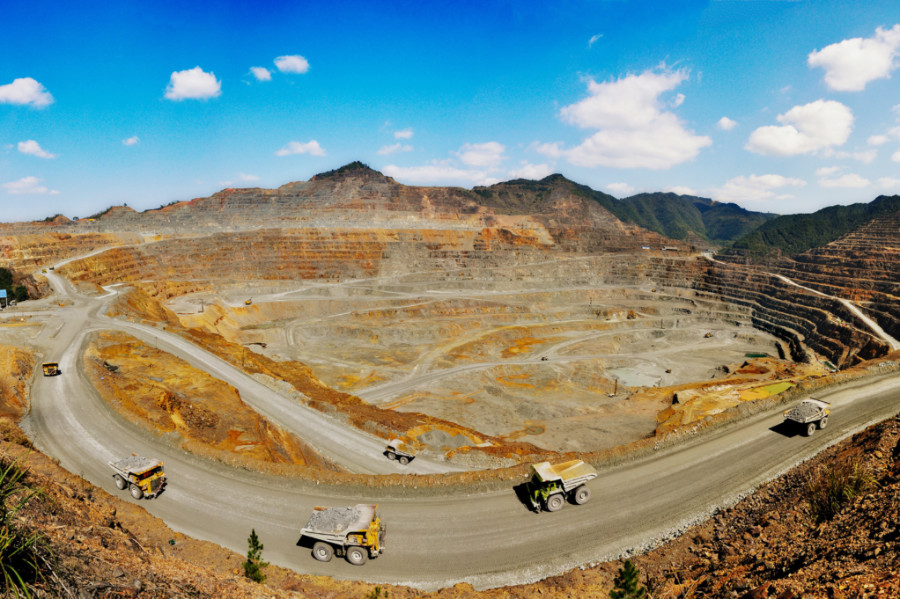
On November 3 (Tuesday), JPMorgan said US copper mine production has the potential to more than double through new mining projects and expansions of existing operations, potentially reversing a decades-long decline as the US government steps up efforts to secure domestic supplies of critical minerals.
The investment bank estimates that the US could add approximately 1.3 million tonnes per year of copper mining capacity, ranking third globally in potential additional supply, behind only Chile and Argentina. However, most of the expected new production is unlikely to come online until after 2030.
According to JPMorgan data, US copper mine production has halved over the past 30 years to approximately 1 million tonnes per year, largely due to prolonged underinvestment. The US share of global copper mine production has fallen from around 50% in 1900 to less than 5% today.
The US is seeking to reduce its dependence on overseas mineral supplies. However, high development costs, lengthy permitting procedures and limited domestic smelting and processing capacity could all constrain the pace of new mine development.
Resolution Project Holds Significant Potential
Of the additional US copper production capacity identified by JPMorgan, the proposed Resolution copper project in Arizona accounts for nearly half, making it a central component of the bank’s long-term production outlook.
The underground mine is a joint venture between Rio Tinto and BHP. The two companies estimate that the mine has a 40-year operating life and could produce approximately 18 million tonnes of copper over its lifetime. At full production, it could meet around 25% of US domestic copper demand.
However, the project still requires regulatory approvals and technical studies, meaning production is unlikely to begin before 2030.
Development costs represent another major obstacle. JPMorgan estimates that US copper projects require approximately $28,000 in capital expenditure per tonne of annual production capacity, compared with a global average of $26,000 per tonne.
These relatively high costs could weigh on project returns, particularly for large underground mines that require substantial infrastructure investment before production can begin.
Near-Term Opportunities
JPMorgan noted that Freeport-McMoRan, the largest copper producer in the US, is among the companies best positioned to increase domestic production over the medium term.
The bank estimates that brownfield expansion projects at Freeport’s existing mining operations could add more than 250,000 tonnes of annual copper production capacity.
Such projects can deliver additional copper more quickly than new mines because they can leverage existing infrastructure and avoid some of the permitting and construction challenges associated with greenfield developments.
Regulatory reforms could also improve the outlook. The US introduced the FAST-41 framework in 2025 to streamline federal reviews of major infrastructure projects. Eligible mining projects could benefit from shorter permitting timelines.
JPMorgan also highlighted advances in in-situ copper recovery technology, which extracts copper from ore without conventional excavation, as well as the reopening of idle mines, as potential sources of additional production.
However, increasing mine output alone will not make the US self-sufficient in copper. The country currently faces a domestic primary copper supply deficit of approximately 1 million tonnes, meaning additional smelting and refining capacity will be needed to process more domestically mined concentrates.
Therefore, investment in smelting and processing infrastructure, alongside progress in mine development, will determine whether this potential production growth can translate into a secure and resilient domestic copper supply chain.
[出处 – 上海有色网] 摩根大通:美国铜矿产量有望翻倍以上 https://news.smm.cn/news/104202677